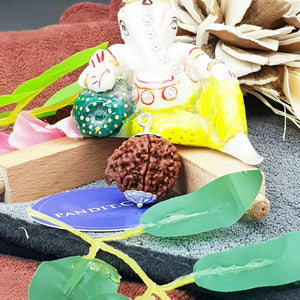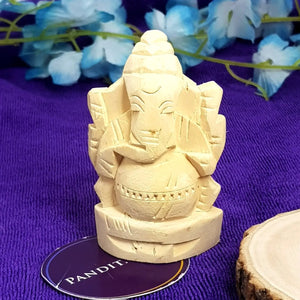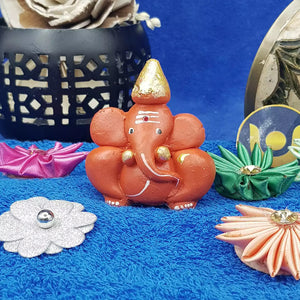


Ganesh Chaturthi is a festival filled with color, music, and joy — a time when we welcome Lord Ganesha, celebrate his birth, and remember the story of how he came to have his elephant head. Over the years, as the celebrations have spread far beyond India, people have added their own touches and new rituals to the traditions. With so much variety, it’s natural to wonder, “Am I doing it the right way?” In this blog, Pt. Rahul Kaushl answers some of the most common questions about Ganesh Chaturthi, sharing simple, meaningful, and tradition-based guidance so you can celebrate with both devotion and confidence.
1. Which fruits or sweets are considered most auspicious for Ganpati?
Lord Ganpati is believed to be fond of naturally sweet, sattvic (pure) foods. Modaks, laddoos, bananas, pomegranates, and coconuts are considered highly auspicious because they are unprocessed, nourishing, and symbolize abundance.
- Pomegranate: So many seeds mean lots of life, luck, and wealth.
- Banana: The plant bends when full, teaching us to stay humble when we succeed.
- Coconut: Breaking the hard shell is like breaking the ego to show our pure heart.
- Seasonal Fruits: Giving what grows right now shows thanks for nature’s gifts.

2. Is there a specific number of modaks that should be offered?
Traditionally, 21 modaks are offered because the number is special — it comes from 5 senses + 5 elements + 11 divine powers (Rudras), adding up to 21 parts of creation. Offering these is believed to bring blessings in every part of life. But what matters most is devotion — even one modak given with love is just as powerful.
3. Why is durva (Bermuda grass) offered, and how many blades should it have?
A long time ago, there lived a terrifying demon called Analasura. His very breath was fire — so fierce that it could burn forests, rivers, and even the bravest warriors to ashes. Wherever he went, people ran in fear.
The gods tried everything to stop him, but no one was strong enough. Finally, they turned to Lord Ganpati, the remover of obstacles. Ganpati, always ready to protect, grew into a giant form and stood before Analasura.
The demon roared and attacked, sending waves of scorching flames toward Ganpati. But instead of fighting back with weapons, Ganpati did something unexpected — he swallowed Analasura whole in one gulp!
It worked — the world was safe again. But there was one problem: Analasura’s fire was now burning inside Ganpati himself. His body turned red, his eyes watered, and the heat was unbearable.
The gods tried everything — they offered him water, sandalwood paste, and cooling flowers, but nothing helped. Then, some wise sages brought durva grass and gently placed it on Ganpati’s head and body.
Instantly, the heat faded. Ganpati felt peaceful again, smiling with relief. From that day, durva became his favorite offering, a reminder that even the fiercest fires — of anger, ego, or trouble — can be cooled with the right devotion.
And that’s why devotees offer 21 blades of durva to Lord Ganpati — a simple act to invite peace, victory, and balance into life.
4. Which flowers are considered sacred for Ganpati puja?
The red hibiscus is most sacred for Ganpati because its bright red color represents power and the muladhara (root) chakra, where his energy is believed to reside. Other flowers like marigold (purity), jasmine (spiritual awakening), and lotus (divine beauty) are also considered auspicious. In general, red flowers symbolize active, protective energy — perfectly matching Ganpati’s role as Vighnaharta, the remover of obstacles.
5. Which offerings should never be placed before Ganpati?
Any bitter, pungent, or tamasic (energy-lowering) items like onion, garlic, and non-vegetarian food are strictly avoided. Broken rice, stale food, or anything past its natural freshness is also considered inauspicious because offerings to deities must be as pure and life-filled as possible.
6. Why should Tulsi leaves not be offered to Lord Ganpati?
One day, young Lord Ganpati was meditating deeply on the banks of the Ganga. At that time, Tulsi Devi, the goddess of the holy basil plant, was wandering through the area. When she saw Ganpati, she was struck by his divine radiance and calm presence.
Tulsi approached him and said, “O Lord, I wish to marry you. You are wise, strong, and pure — I can think of no better partner.”
Ganpati gently smiled and replied, “Tulsi Devi, I have taken a vow of celibacy. My path is one of detachment, and marriage is not for me.”
Hearing this, Tulsi was deeply hurt. In her anger, she said, “If you refuse me, I curse you — you will be married not once, but twice!”
Ganpati, still calm, said, “Your words will come true in time, but for your disrespect, I curse you in return — you will never be used in my worship.”
From that day, Tulsi became sacred to Lord Vishnu, her association with his worship growing strong, while she remained absent from Ganpati’s rituals.
7. Is it wrong to look at the moon on Ganesh Chaturthi night? What’s the story?
Long ago, on the night of Ganesh Chaturthi, Lord Ganpati was returning home after a feast. He was riding his mouse, carrying his big round belly, when suddenly the mouse stumbled over a snake. Ganpati fell, and his stomach burst open, with all the sweets tumbling out. Calmly, he gathered them back, tied his belly with the snake, and continued on his way.
But up in the sky, the Moon God (Chandra) was watching. Instead of showing respect, the moon laughed at Ganpati’s appearance — his plump belly, his snake belt, and his mouse vehicle.
Ganpati, hurt by the mockery, became angry and cursed the moon:
"You, who are so proud of your beauty, will lose your radiance. And anyone who looks at you on this day will face false accusations and dishonor."
The Moon soon realized his mistake and apologized. Ganpati softened the curse but didn’t remove it entirely — he said the moon would wax and wane, regaining its beauty, but the ill effect of seeing it on Ganesh Chaturthi night would remain. To this day, devotees avoid looking at the moon on that night.
If someone sees it by mistake, they can chant certain mantras or listen to the story of Syamantaka Mani (a related tale) to remove the curse’s effect.
8. Why is visarjan water not poured directly into drains?
Visarjan water is seen as teerth (holy water) because it has absorbed the blessings and energy of the puja. Pouring it into a drain is considered disrespectful, as it mixes with dirty waste. Traditionally, it’s gently poured at the roots of a sacred plant, like Tulsi, or into a clean water source — a way of returning it to nature with honor.
9. Can we perform Ganpati puja without a priest?
Yes. Ganpati puja can be done without a priest because its true essence is your personal connection with the divine. Scriptures say devotion, purity, and sincerity matter more than perfectly reciting mantras. A priest can guide for accuracy, but a simple, heartfelt home puja is just as pleasing to Lord Ganpati.
10. Why is Ganpati worshipped before starting any new work or puja?
Ganpati is worshipped first because he is Prathamesh, the one who removes obstacles and blesses new beginnings. This comes from the story where Shiva and Parvati declared him the first to be honored after he cleverly circled them, saying they were his whole world — showing wisdom is greater than speed or strength.
11. What is the significance of the left vs. right trunk of Ganpati idols?
When Ganpati’s trunk bends to the left, it’s said to carry a calm, soothing energy — like the cool glow of the moon — making it perfect for home worship and bringing peace and prosperity. When the trunk bends to the right, the energy is strong and fiery, like the sun. It’s very powerful but also demanding, so it needs strict and careful worship, which is why this form is mostly found in temples.
12. Why is red considered auspicious for Ganpati decorations?
Red is considered lucky for Ganpati because it’s the color of shakti — the vibrant life force — and it’s linked to the muladhara chakra, the energy center at the base of the spine where Ganpati’s power is believed to reside. In a space, red doesn’t just look festive — it’s thought to charge the atmosphere, sparking courage, passion, and determination. These are exactly the qualities you need when asking Ganpati to help clear life’s hurdles. That’s why from flowers to drapes, splashes of red are seen as an open invitation for his protective and grounding energy.
13. How many days should Ganpati be kept at home before visarjan?
Traditionally, Ganpati is kept at home for 1.5, 3, 5, 7, or 11 days — all odd numbers believed to be auspicious. Families choose the duration based on tradition and convenience, but the deeper idea is this: welcome him with joy, celebrate wholeheartedly, and then let go gracefully. The visarjan isn’t an end — it’s a reminder that life is about celebration without clinging, and renewal after every goodbye.
14. What is the spiritual meaning of offering coconut during Ganpati puja?
In Ganpati puja, the coconut is seen as a symbol of the human ego — tough and protective on the outside, but pure and gentle within. When you break it, you’re really saying, “I’m breaking my ego to reveal my true self.” The sweet water inside stands for the life energy we carry, which we offer back to the divine as a gesture of gratitude and surrender.
15. Can clay Ganpati idols be painted with chemical colors?
Painting clay Ganpati idols with chemical colors goes against the whole idea of eco-friendly worship. After visarjan, these paints release toxins into the water, harming fish, plants, and the entire ecosystem. If you want to add color, it’s best to use natural options like turmeric, kumkum, or vegetable dyes — they’re safe for the environment and still look beautiful.
16. What is the right way to perform eco-friendly visarjan at home?
Painting clay Ganpati idols with chemical colors goes against the whole idea of eco-friendly worship. After visarjan, these paints release toxins into the water, harming fish, plants, and the entire ecosystem. If you want to add color, it’s best to use natural options like turmeric, kumkum, or vegetable dyes — they’re safe for the environment and still look beautiful.
17. Is it acceptable to use artificial flowers in Ganpati decorations?
Fresh flowers are preferred for Ganpati because they carry prana — natural life energy — along with a fragrance that uplifts the space. Artificial flowers, while pretty, don’t have this spiritual vitality. Still, if you’re thinking about sustainability, reusability, or budget, artificial flowers can be used for decoration around the idol. Just keep the offering itself pure by placing a few fresh blooms directly before Ganpati, so the ritual essence is preserved.
Final Comments!
Ganesh Chaturthi is more than a celebration of color, music, and sweets — it’s a festival rich with symbolism, where every ritual, from offering 21 modaks to placing durva grass, carries deep spiritual meaning and timeless life lessons. The traditions, stories, and customs — whether it’s avoiding Tulsi leaves, choosing eco-friendly idols, or honoring the significance of a left-bending trunk — remind us of humility, gratitude, and respect for nature. While practices may vary, the “right way” to celebrate lies in devotion, sincerity, and joy, ensuring that as we welcome Lord Ganpati and bid him farewell, we also embrace the cycle of beginnings and endings with grace and reverence.