

Every tradition that transmits knowledge across generations eventually runs into the same problem: the knowledge is heavier than the person carrying it. Guru Purnima is the day the Indian tradition set aside to acknowledge that problem, and the people who solve it.
It falls on the full moon of Ashadha, the last full moon before the monsoon settles in properly. Hindus, Buddhists and Jains all keep it, for reasons that turn out to share a root.
Quick answer
| Also called | Vyasa Purnima, Ashadha Purnima |
| Tithi | Purnima, Shukla Paksha |
| Lunar month | Ashadha |
| This year | Wednesday, 29 July 2026 |
| Tithi begins | 28 July, 6:18 PM |
| Tithi ends | 29 July, 8:05 PM |
| Moonrise | 7:21 PM |
| Honoured | Maharishi Veda Vyasa; one's own guru |
| Core practice | Guru puja, Guru Gita paath, dakshina, vidya-daan |
| Observed by | Hindus, Buddhists, Jains |
Timings computed for New Delhi. Tithi start and end shift with local sunrise and longitude. Confirm against a panchang for your city.
What the word guru actually means
The explanation you meet everywhere is that gu means darkness and ru means the one who removes it. That reading is not invented. It appears in the Advayataraka Upanishad, which states plainly that the syllable gu stands for darkness and ru for its restraint.
There is a second meaning, and most articles leave it out. In ordinary Sanskrit, guru means heavy. It is the word for a weighty object, and it is cousin to the Latin gravis, from which English gets gravity. A guru is someone with mass. Things orbit them.
Hold both readings at once. One describes what a teacher does. The other describes what a teacher is. The tradition that produced the Upanishads was rarely careless with words, and the double sense is the point. A person light enough to be moved by every passing opinion cannot steady anyone else.
Why this particular full moon
A full moon occurs when the Moon stands opposite the Sun and returns the whole of its light to us. It generates none of it. Every particle of brightness on that surface is borrowed. The Purusha Sukta places the Moon at the origin of mind itself.
So the full moon is the mind at its most reflective. That is the festival compressed into one image. The disciple has no original light either. What passes through is received, and the work is to become a clean surface.
The second reason is structural rather than symbolic, and most writing on this day misses it. Ashadha Purnima opens Chaturmas, the four monsoon months. Rivers rise, roads dissolve, and wandering ascetics who spent the dry season walking stop walking. They settle in one place. For four months they are available, in a fixed location, with nothing to do but teach.
The teaching season begins here because travel ends here. That is not metaphor. It is logistics, and the calendar was built around it.
The same tithi carries the Buddhist observance for the same reason. Tradition places the Buddha's first discourse at the deer park in Sarnath on this full moon, given to the five ascetics who had earlier abandoned him. It survives as the Dhammacakkappavattana Sutta. Buddhist monastics begin Vassa, the three-month rains retreat, from this same point in the calendar.
Five accounts from the shastras
Each of these is traceable to a named text and chapter. Where a story is hagiography rather than scripture, it is not here.

The day carries his name. Vyasa was born to the sage Parashara and Satyavati on an island in the Yamuna, which is why he is called Krishna Dvaipayana, the dark one of the island.
His title is the work itself. Vyasa means the arranger, the one who divides. The Veda existed as a single body of knowledge, and he separated it into four so that four lines of students could carry what one line no longer could. He then composed the Mahabharata and the Puranas for everyone the Vedic training excluded.
Read that as compassion rather than scholarship. He looked at a weakening age and redesigned the transmission so it would survive the people receiving it.
Vishnu Purana 3.3–3.4 · Mahabharata, Adi Parva
King Yadu meets an avadhuta wandering naked and untroubled, and asks where such ease came from. The avadhuta answers that he took twenty-four gurus.
The earth, for bearing what is done to it. The wind, for moving through the world without taking on its qualities. The python, for accepting what arrives. The bee, for gathering a little from many flowers and crushing none. The moth, for what attraction to brightness costs. The elephant, trapped by the touch of another elephant. And Pingala, a courtesan who slept peacefully only on the night she stopped waiting for a client, and understood that hope placed in the wrong object was the whole source of her misery.
The account settles a question people ask every year. If you have no formal guru, the teaching function has not stopped. It is distributed. What you owe it is attention.
Bhagavata Purana 11.7–11.9
Krishna and Balarama went to the ashram of Sandipani Muni at Avantipura and served him as any student would, carrying fuel and doing the ordinary work of the house. They completed sixty-four disciplines in sixty-four days.
What matters is the ending. Asked for his dakshina, Sandipani requested his son, drowned years earlier at Prabhasa. Krishna went to Yama and brought the boy back.
The teacher asked for the one thing he could not obtain himself, and he asked only after the teaching was complete. That is the correct shape of dakshina. It is not a fee. It is the disciple demonstrating that the transmission worked.
Bhagavata Purana 10.45
A boy wanted to study and needed to state his lineage. He asked his mother, Jabala, who told him she did not know. She had worked in many houses in her youth and had him then.
He went to Gautama Haridrumata and repeated it exactly, without softening it. The teacher's response is one of the sharper moments in the Upanishads. No one but a brahmana could speak so plainly. He accepted the boy on the spot.
Lineage was the standard qualification of the era. Gautama overruled it because the boy would not lie about something humiliating. That is what the tradition says a guru is actually testing for.
Chandogya Upanishad 4.4
A boy is sent to the house of death and waits three nights without food. Yama, having failed his duty as host, offers three boons in compensation.
Nachiketa spends the first two carefully, then asks with the third what happens to a person after death. Yama refuses. He offers sons, cattle, land, long life, chariots, women, dominion. Nachiketa returns each one, observing that pleasures wear out the very senses that enjoy them, and that the longest life is still short. He asks again.
Only then does Yama teach him. The account is unambiguous about why. The teaching was withheld until the student proved he could not be bought off with something easier.
Katha Upanishad 1.1–1.3What the texts say about the guru
Two conditions, both required. Shrotriya is textual competence. Brahmanishtha is direct realisation. Learning without realisation produces a scholar. Realisation without learning produces someone who cannot transmit what they have. The fuel in hand is not ceremony either. The student arrives carrying something useful to the household.
Krishna places questioning in the middle of the three. Paripraśna means asking all around a thing until it is understood. Surrender in this tradition was never meant to exclude enquiry.
गुरुः साक्षात् परब्रह्म तस्मै श्रीगुरवे नमः ॥
चक्षुरुन्मीलितं येन तस्मै श्रीगुरवे नमः ॥
The image is surgical, not sentimental. A cataract needle. The eye already worked. Something opaque had formed over it and had to be lifted.
How to observe the day
- Bathe before sunrise and take a clean seat facing east or north.
- Make the sankalpa. State plainly what you are undertaking and for whom.
- Offer to Vyasa first. A book, a white cloth, sandal paste, white flowers. The lineage is honoured before any individual teacher.
- Offer to your own guru. In person if they are present, at their image or seat if not.
- Read the Guru Gita, or the two verses above if time is short. Read aloud.
- Give dakshina. Not payment for a service. Acknowledgement that something was received.
- Take darshan of the moon after it rises, and sit quietly for a few minutes.
If you keep a fast, most families observe it on fruit and milk and break it after moon darshan. There is no rigid parana rule as there is with Ekadashi. Follow your family's practice.
Mantras and remedies for the day
| Guru beeja | ॐ गुं गुरुभ्यो नमः — 108 repetitions |
| Guru vandana | गुरुर्ब्रह्मा गुरुर्विष्णुः — 11 or 21 repetitions |
| Full paath | Guru Gita, whole or first section |
| Brihaspati beeja | ॐ ग्रां ग्रीं ग्रौं सः गुरवे नमः — only if working the graha |
The remedy that belongs specifically to this day is vidya-daan, the gift of learning. Books for a student who cannot buy them. Fees for a child whose family has stopped paying. An hour of teaching given to someone who asked. On the day that honours transmission, the appropriate offering is transmission.
Beyond that: yellow cloth, chana dal, turmeric, ghee, and a meal to someone genuinely in need. Keep it proportionate. Nothing in the texts scales the result to the expense.
The Jupiter question, answered properly
Guru Purnima is not Brihaspati's festival. This is the most common error in popular writing on the day, and it is worth correcting.
The word guru in Guru Purnima means teacher. Brihaspati, the planet Jupiter, is called Guru because he is preceptor to the devas. Two separate uses of one word. The festival is fixed to the Ashadha full moon, a Sun and Moon position. Jupiter's own placement has nothing to do with when it falls.
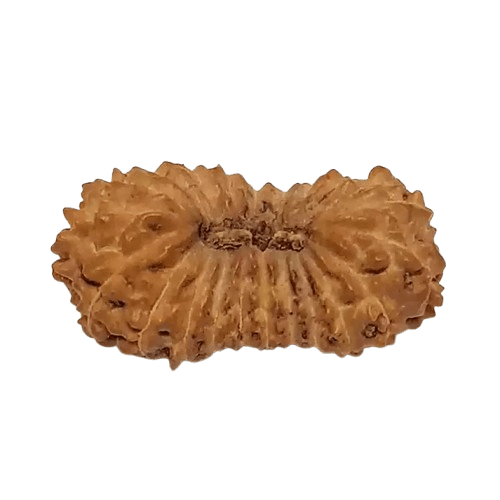
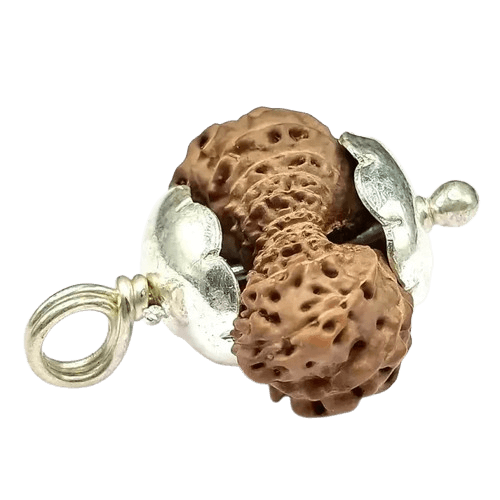
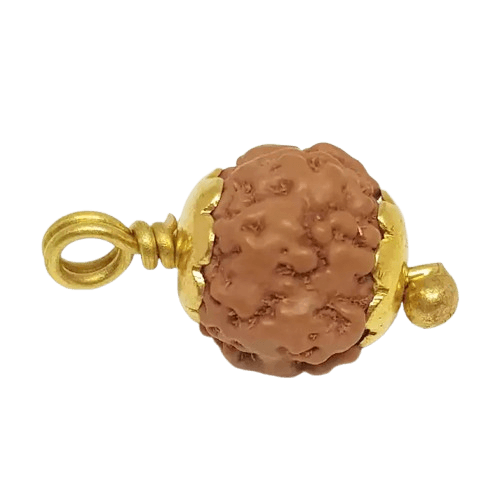
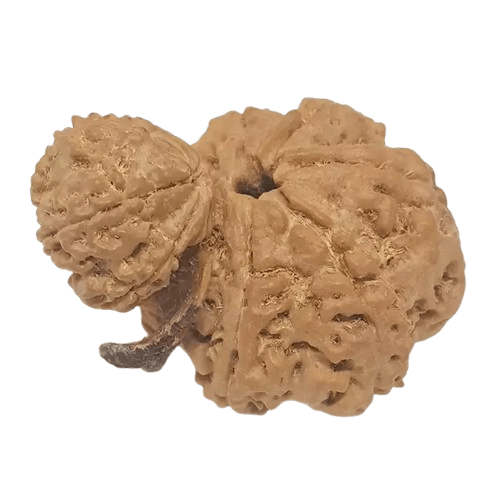
If you do want to strengthen Brihaspati, the classical route is straightforward and unrelated to this date. Thursday is his weekday. Brihaspati Hora on any day. His beeja mantra. Yellow sapphire, only after chart analysis, never on a festival impulse. Five-faced Rudraksha, which the classical texts assign to Guru.
Both things can be true on the same day. Just do not confuse the reason for either.
Why the date moves so much
Guru Purnima has landed as early as 3 July and as late as 31 July. That is a twenty-eight day swing, wider than most people expect from a festival that is supposedly fixed.
The cause is arithmetic. Twelve lunar months run about 354 days. The solar year runs about 365. Every year the lunar calendar loses roughly eleven days against the seasons, and every festival slides earlier.
Left alone for a few decades, Ashadha would drift out of the monsoon entirely and the festival would lose the Chaturmas logic that placed it there. So the calendar corrects. Roughly every third year an extra month, Adhik Maas, is inserted. The gap from one Guru Purnima to the next jumps from 354 days to about 384, and the date snaps back into late July.
The years ahead
| Year | Date | Day | Gap |
|---|---|---|---|
| 2026 | 29 July | Wednesday | 384 — Adhik Maas |
| 2027 | 18 July | Sunday | 354 |
| 2028 | 6 July | Thursday | 354 |
| 2029 | 25 July | Wednesday | 384 — Adhik Maas |
| 2030 | 15 July | Monday | 355 |
| 2031 | 4 July | Friday | 354 |
| 2032 | 22 July | Thursday | 384 — Adhik Maas |
| 2033 | 12 July | Tuesday | 355 |
| 2034 | 31 July | Monday | 384 — Adhik Maas |
| 2035 | 20 July | Friday | 354 |
Read the gap column downward and the mechanism becomes visible. Two or three short years push the date earlier, then one long year pulls it back. 2028 falls on 6 July, close to the earliest it goes. The correction in 2029 moves it nineteen days later in a single step.
Recent years, for reference
| Year | Date | Day |
|---|---|---|
| 2025 | 10 July | Thursday |
| 2024 | 21 July | Sunday |
| 2023 | 3 July | Monday |
| 2022 | 13 July | Wednesday |
| 2021 | 24 July | Saturday |
| 2020 | 5 July | Sunday |
| 2019 | 16 July | Tuesday |
| 2018 | 27 July | Friday |
| 2017 | 9 July | Sunday |
| 2016 | 19 July | Tuesday |
| 2015 | 31 July | Friday |
2023 and 2015 mark the two ends of the range, 3 July and 31 July. Everything else sits between them.
Frequently asked questions
Wednesday, 29 July 2026. The Purnima tithi begins at 6:18 PM on 28 July and ends at 8:05 PM on 29 July. Because the tithi is present at sunrise on the 29th, that is the observance day.
Maharishi Veda Vyasa is held to have been born on this tithi. He divided the Veda into four and composed the Mahabharata and the Puranas, which is why the day honours him before any individual teacher.
Yes. The Bhagavata Purana account of Dattatreya's twenty-four teachers exists for exactly this. Honour your parents, your schoolteachers, and anyone who taught you something you still use. The lineage puja to Vyasa is open to everyone.
No. Guru here means teacher. Jupiter is called Guru separately, as preceptor of the devas. The festival is fixed by the Sun and Moon, not by Jupiter's position.
Whatever is proportionate to you and given without calculation. Classically it follows the teaching rather than purchasing it. If you have no teacher to give to, vidya-daan carries the same intent.
It is optional and follows family custom. Most keep a fruit and milk fast and break it after moon darshan. There is no fixed parana rule.
The Buddha's first discourse at Sarnath is traditionally placed on this full moon, and the monastic rains retreat, Vassa, begins from here. Both traditions mark the same tithi because both mark the start of the settled teaching season.
The tithi is the same nationally. The exact start and end times shift with local sunrise and longitude, so the puja window differs by city.
7:21 PM in Delhi this year. It varies by location, so check a panchang for your city.
Sunday, 18 July 2027. The full ten-year table is above.
Sources
Rigveda 10.90.13, Purusha Sukta · Mundaka Upanishad 1.2.12 · Chandogya Upanishad 4.4 · Katha Upanishad 1.1–1.3 · Advayataraka Upanishad 16 · Bhagavad Gita 4.34 · Bhagavata Purana 10.45 and 11.7–11.9 · Vishnu Purana 3.3–3.4 · Mahabharata, Adi Parva · Guru Gita, Skanda Purana · Dhammacakkappavattana Sutta, Samyutta Nikaya 56.11.
Panchang timings computed for New Delhi using the Lahiri ayanamsa.
Rahul Kaushl
Founder, Pandit.com · Astrologer, numerologist and Vastu consultant with 25+ years in the Vedic sciences.
For a muhurat or chart reading suited to your own situation, book a consultation.